
Application Number: AU 2025220719
Dynamic Zone Management System for Autonomous Vehicle Operations
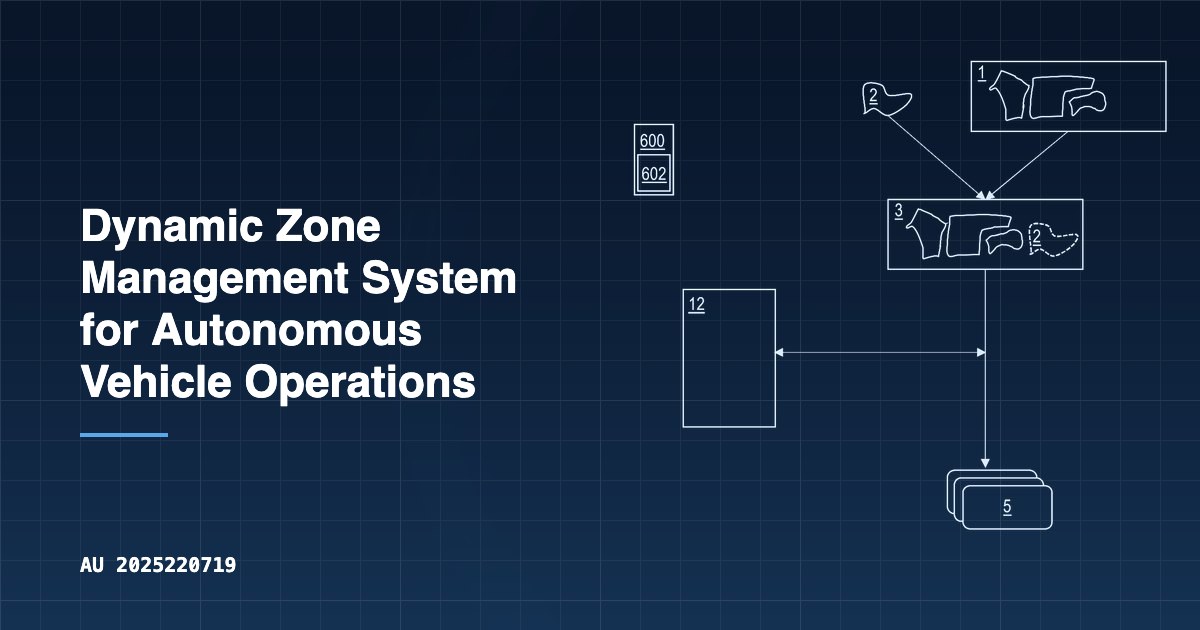
Volvo's system manages a set of zones arranged for autonomous vehicle operation through processing circuitry configured to handle zone definition and updates. The system obtains an indication of current zone definitions and proposed updates to those zones. It then produces an updated zone set based on the update information and current zone definitions. Critically, the
View the Dynamic Zone Management System for Autonomous Vehicle Operations PDF
Download the PDF version of this Application Open to Public Inspection
Autonomous vehicles require different operational parameters in different environments. Volvo Autonomous Solutions introduces a system for managing geographic zones with distinct behavioral rules and updating these zones dynamically as road conditions and infrastructure requirements change. The system enables automated verification of zone changes, ensuring operational parameters for autonomous vehicles reflect current environmental conditions.
The Problem
Autonomous vehicles operating across varied terrain require geofencing – defined geographic boundaries where specific operational parameters apply. Speed limits differ between urban and highway zones. Safety requirements shift in areas with heavy pedestrian traffic versus industrial regions. Weather and traffic patterns create temporary zones requiring adjusted operational modes. Traditional static geofencing proves inadequate for dynamic conditions that change frequently.
Establishing and maintaining accurate zone definitions across large operating areas presents significant challenges. As road conditions change, zones must be updated across entire fleet systems. Manual zone updates introduce delays between actual condition changes and operational system updates, creating periods where vehicles operate under outdated parameters. Verification that zone definitions match actual road conditions requires centralized oversight and communication mechanisms. Current systems lack automated processes for validating zone information received from central systems, making them vulnerable to configuration errors or malicious updates.
What This Invention Does
Volvo’s system manages a set of zones arranged for autonomous vehicle operation through processing circuitry configured to handle zone definition and updates. The system obtains an indication of current zone definitions and proposed updates to those zones. It then produces an updated zone set based on the update information and current zone definitions. Critically, the system provides update information to a verifying entity that can confirm appropriateness before deployment. Only upon receiving confirmation does the system distribute updated zone parameters to the autonomous vehicles.
This multi-stage approach ensures zone updates undergo validation before affecting vehicle operations. The processing circuitry handles zone management logic, update processing, and coordination with verification systems. Vehicles receive approved updates automatically, maintaining synchronized zone definitions across the fleet without manual distribution of new parameters. The verification step provides safety assurance that zone changes reflect legitimate infrastructure and condition changes rather than configuration errors or unauthorized modifications.
Key Features
- Zone Definition Management. The system maintains a set of geographic zones with associated parameters appropriate for autonomous vehicle operation in each zone. Zones can reflect speed limits, functional requirements, traffic patterns, and other environmental variables.
- Update Processing and Validation. The system receives proposed zone updates and can process modifications to zone boundaries, parameters, and definitions while awaiting verification before implementation.
- Centralized Verification Protocol. Updates are provided to a designated verifying entity that can assess appropriateness and provide explicit confirmation before zone changes affect vehicle operations.
- Automated Distribution to Vehicles. Upon verification approval, updated zones are automatically provided to autonomous vehicles in the operating fleet, ensuring synchronized operational parameters.
- Dynamic Adaptation to Changing Conditions. The system enables rapid response to road condition changes, infrastructure modifications, or temporary operational restrictions without requiring vehicle-by-vehicle manual updates.
- Safety-Assured Zone Updates. The verification mechanism ensures zone changes are legitimate modifications reflecting actual conditions rather than erroneous or malicious configuration changes.
Who Is Behind It?
Volvo Autonomous Solutions AB, headquartered in Sweden, focuses on autonomous vehicle technology and transportation solutions. The invention credits two inventors: Stefan Bergquist and Jonas Martinsson, representing Volvo Autonomous Solutions AB, representing the company’s autonomous vehicle systems engineering. The application prioritizes European Patent Application 24196729.8, filed 27 August 2024, establishing earlier priority. Griffith Hack provides patent prosecution services, indicating comprehensive international protection strategy.
Why It Matters
As autonomous vehicle deployments expand across diverse geographic areas, managing operational parameters across different zones becomes increasingly important. This system provides the infrastructure for dynamic geofencing that responds to changing conditions. The verification mechanism addresses critical safety concerns about configuration management in autonomous systems. Fleet operators gain tools for managing vehicles across heterogeneous environments where operational parameters must vary. The system supports compliance with local regulations that may require different operational modes in different jurisdictions or areas. As temporary construction zones, weather events, and traffic conditions create dynamic changes to road characteristics, this technology enables autonomous systems to adapt rapidly while maintaining safety assurance through centralized verification.
Related Concepts
Geofencing is a location-aware technology that defines virtual boundaries within which specific rules or operational modes apply. In autonomous vehicle deployments, geofences define speed limits, route restrictions, and safety zones that differ between highway, urban, and industrial operating environments.
Vehicular automation increasingly relies on centralised fleet management platforms to maintain consistent and safe operational parameters across large vehicle populations. Dynamic zone update systems, combined with verification protocols, address the cybersecurity risks inherent in distributing configuration changes to safety-critical autonomous systems at scale.
AU 2025220719 was published in the Australian Official Journal of Patents on 19 March 2026 and is open for public inspection. Patent applications represent inventions that are sought to be protected and do not necessarily reflect commercially available products.
Related Patents Open to Public Inspections
See related Patents open to public inspection.

Connected Vehicle Roads

Predictive Vehicle Monitoring and Operational Control System

Smart Wire Testing for Modern Vehicle Electrical Systems

Hybrid Suspension Systems Deliver Better Ride and Load Capacity for All-Terrain Vehicles
Disclaimer
The information presented in this article is provided for general informational and illustrative purposes only.
Content on this page may be derived from publicly available intellectual property records, including patent documentation and related materials. While reasonable care is taken in compiling and summarising this information, ATMOSS does not guarantee the accuracy, completeness, currency, or reliability of any content presented.
This article is not a substitute for reviewing the original source documents. Patent applications, specifications, claims, and related records may contain detailed technical, legal, and contextual information that is not fully represented in this summary.
ATMOSS does not provide legal, technical, or commercial advice. Users should not rely on this content for decision-making purposes.
For authoritative and up-to-date information, users should refer directly to the official records available via IP Australia and other relevant intellectual property databases. Links to these official sources are provided where applicable.
ATMOSS accepts no liability for any loss, damage, or consequences arising from the use of, or reliance on, the information contained in this article.