
Patent Applications Open to Public Inspection
Search and View Patent Applications Open to Public Inspection
Every week, inventors, start-ups, universities, and established companies file new patent applications in Australia. Once an application reaches the open to public inspection stage, anyone can view it. This page collects those applications as they are published and explains what each invention actually does, in plain English.
Patent documents are written for lawyers and examiners, not for the public. A single specification can run to hundreds of pages of technical and legal language, which makes it hard for a business owner, investor, journalist, or curious reader to work out what has been invented and why it matters. The summaries on this page are designed to close that gap.
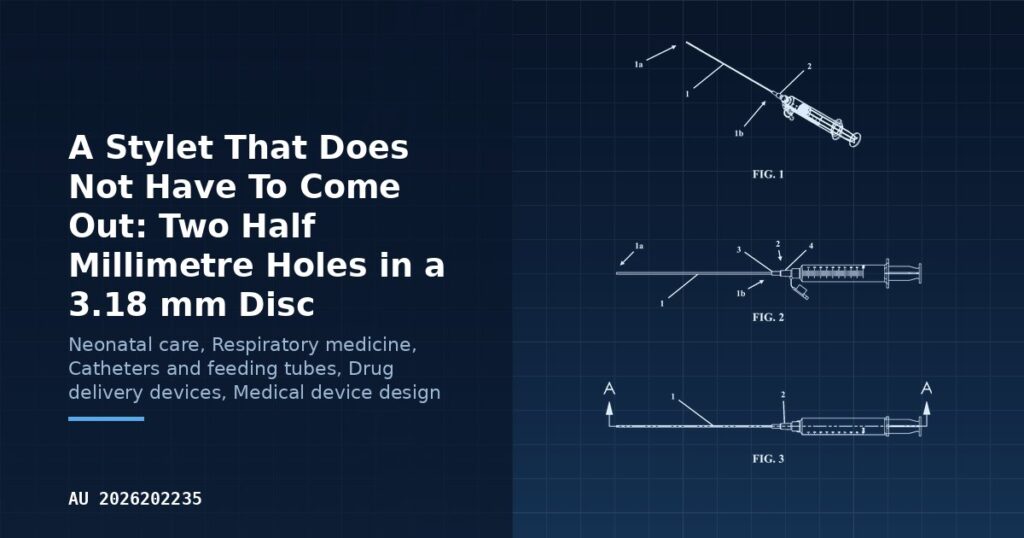
A Stylet That Does Not Have To Come Out

Two Tokens Deep

A Wall Hanger That Grips Harder When Loaded

Jaws That Grip a Cubic Foot of Ballast

A Gene That Reads Correctly Either Way Round

Two Prostate Cancer Drugs in One Tablet

Making Every Phosphorus Atom Pick a Side

Claiming the Metabolite, Not the Drug

Pressing a Tea Bag Seal Evenly at Both Ends

The Bet That Moved After the Deal

The Shoe Knows Whose Card That Was

A Whitening Toothpaste Built on Oxalic Acid

The Claim That Covers Orforglipron

Patenting the Half-Built Molecule

Reading Chips One Zone at a Time

Rebuilding a Melanoma Antibody Into a CAR T Cell

The Cage Becomes a Warehouse

When a DNA Peak Runs Off the Scale


Alpha Seeds First, Then the Checkpoint Drug

Clamping a Mirror Onto a Steel Pipe

Freezing a Straw Around a Metal Tube

The Plug In Sensor That Watches the Whole Grid

Catching a Field Trial Going Wrong Mid Pass

The Ball Inside the Disinfectant Cap

Letting a Fan Breathe Through Its Sides

Two Acids and a Rock

Filtering Across the Seams in a Video Frame

The Step Where a Video Actually Loses Detail

Turning a Prediction Error Into Frequencies

The Residual Arrives as Bits

Four Strips and One Prediction Mode

The Money Tree Above the Machines

An Ovarian Cancer CAR With a Protease Gate

Building Disease Models With CRISPR

The App That Picks the Right Browser Profile

The Enterprise Model Lives on the Chip

A Toilet That Catches Debris Before It Clogs

A Shipping Mailer You Can Recycle Whole

Stroller Boards That Fold Out of the Way

Five Slot Shapes on a Sprinkler Deflector

Leaching Copper Without Burning the Pyrite
Sequencing on a Snap In Cartridge

Send the Enzyme With the Drug

Live From the Combine

One Constant Instead of a Lookup Table

Telling a Harmless Lump From a Cancer

Defined by Its Recipe

The Symbol That Copies the Whole Screen

Two Electrodes an Inch Apart

A Scannable Code Instead of a Loyalty Card

Every Reel Position Gets a Price Tag

Coins Thrown Onto the Reels, Then Turned Over

Turning Down the Complement Amplifier
Official & Trusted
Direct access to IP Australia databases. Always official, always up to date.
Fast & Efficient
Skip the government menus and get results in seconds.
Private & Secure
Your searches are private. We do not store your search data.
Here to Help
Need assistance? Our team is ready to support you.
What "Open to Public Inspection" Means
Open to Public Inspection (OPI) is the stage at which a patent application and its specification become available for anyone to view. Before this point, the details of the application are confidential.
Once an application is open to public inspection, the public record typically includes:
- The patent specification and the claims that describe the invention
- Technical drawings
- The names of the inventor and applicant
- Supporting documents held on the official file
One point is worth being clear about: open to public inspection is not the same as a granted patent. OPI means the application can be read, not that protection has been approved. Many applications are still under examination at this stage, and some are later withdrawn, lapse, or are refused.
When Does an Australian Patent Application Become Public?
For most applications, open to public inspection happens around 18 months after the earliest filing or priority date. Some are published sooner, depending on how they were filed and whether early publication was requested. Until that point the application stays confidential, which is why a newly published application can describe work that began two or more years earlier.
Australian Patent Applications, Explained in Plain English
Rather than asking you to read a full specification, each entry on this page summarises the invention so you can understand it in a minute or two:
- The problem the invention sets out to solve
- How the technology works
- The key features that make it different
- Where it might be used
- Why it could matter
Every summary links back to the official application, so you can read the original documents whenever you want the full detail. New applications are added as they become open to public inspection, so the page works as a continuously updated view of fresh Australian innovation.

Who Uses This Page
Newly published applications give an early, unfiltered view of where industries are heading, often well before a product is announced. That makes the page useful for several groups:
- Business owners tracking competitors, suppliers, and emerging technology in their sector
- Investors and analysts looking for active research and development before it reaches the market
- Researchers and academics following a specialised field
- Journalists and writers hunting for genuinely new inventions to cover
- Students and curious readers who want to see how real problems get solved
Areas of Innovation You Will Find Here
Applications published in Australia span almost every field. Common areas include:
- Artificial intelligence and machine learning
- Medical devices, biotechnology, and pharmaceuticals
- Renewable energy, batteries, and energy storage
- Mining, resources, and advanced materials
- Agriculture and food technology
- Robotics, automation, and autonomous vehicles
- Construction and building technology
- Software, cloud, and telecommunications
- Consumer products and home improvement
Use the search box and category filters above to focus on the sectors that matter to you.
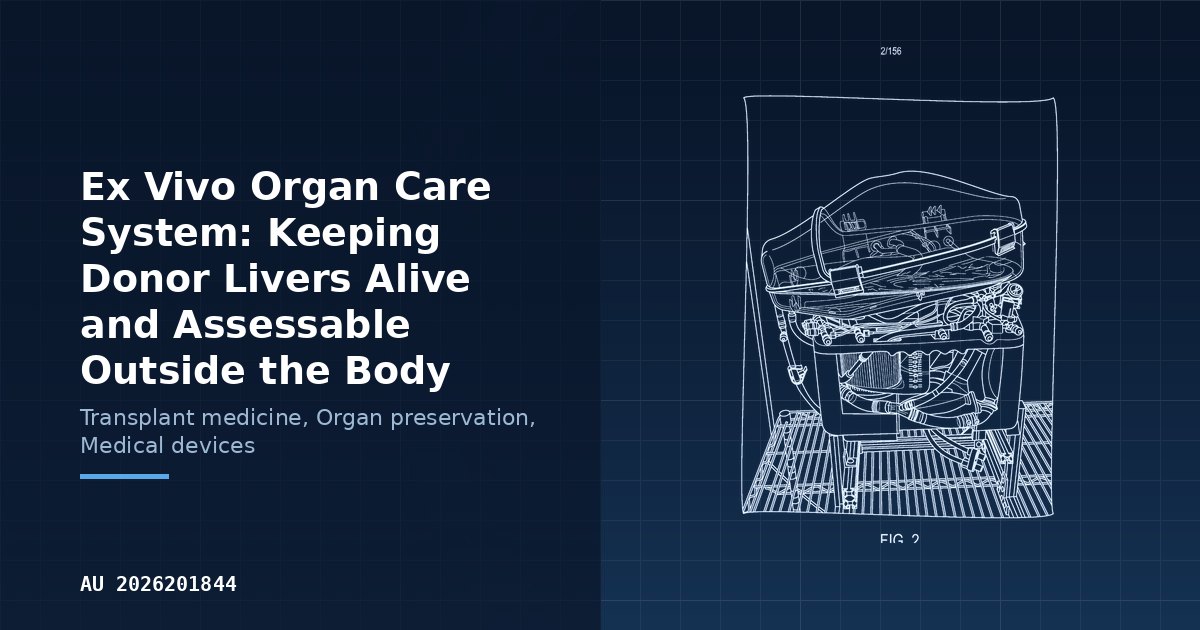
Start Exploring
Browse the latest applications above, filter by status or category, or open any summary to see what has just entered the public record. Each one is a small window into what Australian inventors and businesses are working on right now.
Frequently Asked Questions
Yes. Once an application reaches the open to public inspection stage, its specification and supporting documents become part of the public record and anyone can view them.
How to Check a Name Properly
Popular Searches
Important Disclaimer
ATMOSS is an independent gateway and is not affiliated with IP Australia. All searches pull from or redirect to official government databases. This website does not provide legal advice.